
Real-Time Translation: Future of Museum Guides

Real-Time Translation: Future of Museum Guides
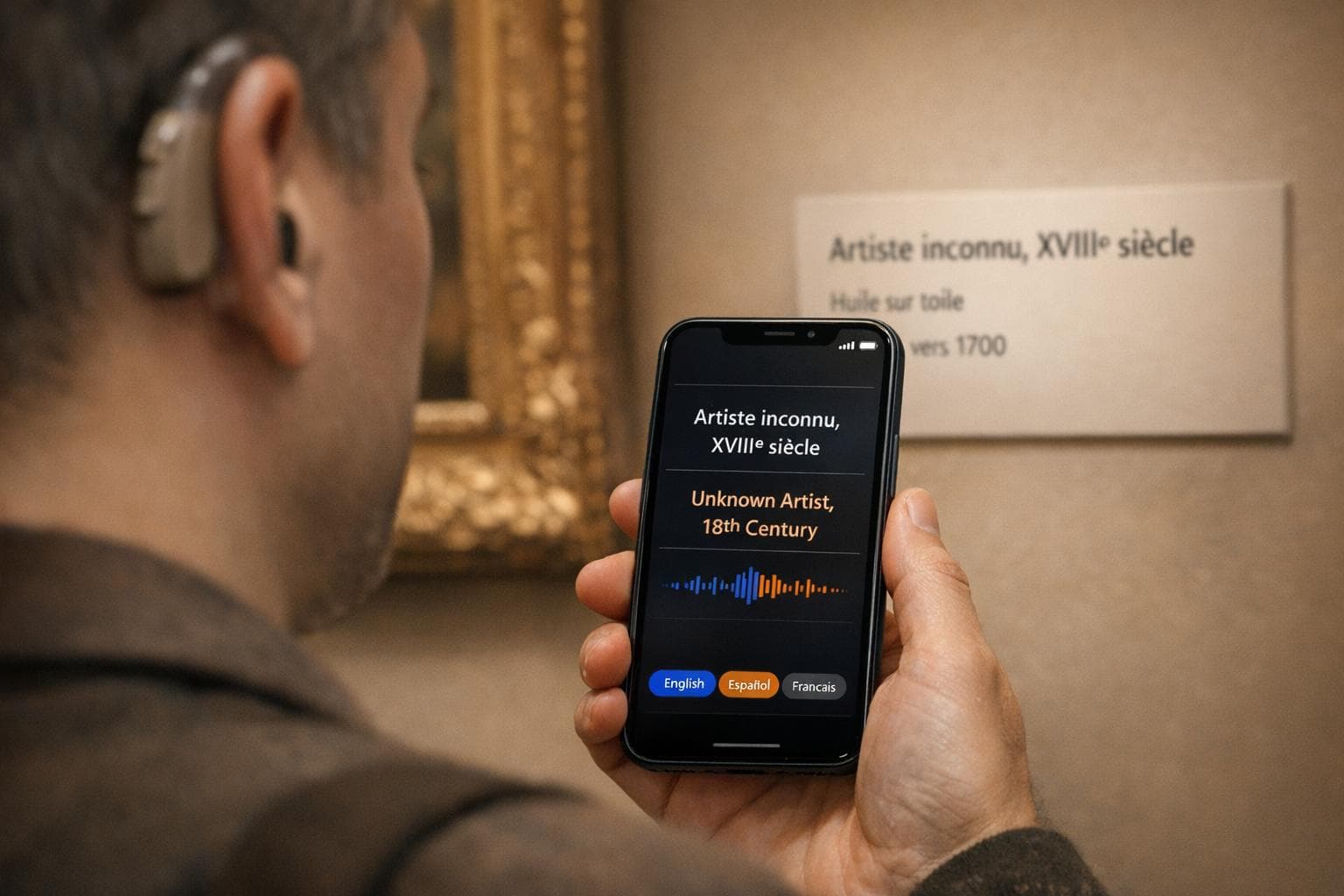
Museums are transforming how they guide visitors by replacing outdated audio devices with smartphone-based, AI-powered real-time translation tools. These systems provide instant translations in over 35 languages, solving issues like language barriers, high costs, and accessibility challenges. Visitors simply scan a QR code to access translated audio or text directly on their devices, eliminating the need for rented equipment.
Key highlights:
- Multilingual Support: Over 35 languages available for seamless tours.
- Cost Efficiency: AI tools like Museumfy are cheaper than traditional systems, with plans starting at $9.99/month.
- Personalization: Tailored content based on user preferences.
- Accessibility: Works on personal devices, improving convenience and hygiene.
Museumfy stands out by offering photo-triggered translations and adaptive narratives. Compared to traditional audio guides and human-led tours, these AI tools are faster, more flexible, and cost-effective - meeting the needs of modern visitors while reducing operational burdens for museums.
Generative AI Guide Creates Truly Immersive, Inclusive and Hyper-personalised Museum Experiences
sbb-itb-e44833b
1. Traditional Audio Guides
Museums have relied on handheld audio devices for years to guide visitors through their exhibits. These systems involve renting a device at the entrance and returning it after the visit. While they’ve served their purpose, these systems come with several drawbacks that make them less practical in today’s fast-paced, tech-savvy world.
Multilingual Support
One of the biggest challenges with traditional audio guides is their limited language options. Typically, they offer only a few choices - like English, Spanish, French, and German. Adding more languages means hiring external translators, which is both expensive and time-consuming. As a result, many visitors are left with a one-size-fits-all experience that doesn’t cater to their specific needs.
Cost
The financial burden of maintaining traditional audio systems is significant. Museums must invest in specialized devices, which come with ongoing maintenance costs. These include hardware repairs, replacing batteries, and sanitizing the devices after each use. On top of that, there’s the environmental impact of disposing of outdated equipment. To put things into perspective, newer digital alternatives can cost as little as $650 for 500 reusable cards, with no recurring subscription fees. When you compare that to the ongoing expenses of traditional systems, the difference is clear.
Immediacy
Traditional guides often come with frustrating delays. Visitors have to wait in line to pick up the devices, which might also need to be sanitized before use. And even when the equipment is in hand, the experience can feel clunky. For instance, push-to-talk systems for asking questions are not only inefficient but can also be intimidating for some visitors. These delays and awkward interactions can detract from the overall museum experience.
Accessibility
Accessibility is another area where traditional audio guides fall short. They offer little flexibility for visitors with hearing impairments or mobility challenges. The devices themselves can be bulky and hard to handle, especially for individuals with mobility concerns or parents managing small children.
These limitations underscore the need for newer, smarter solutions that can make museum visits more engaging and inclusive for everyone. Modern, AI-powered tools are stepping in to fill these gaps, offering a better way forward.
2. Human-Led Tours
Human-led tours bring a personal touch and expertise that technology struggles to replicate. However, they face challenges, especially when catering to international audiences. Modern AI tools are stepping in to address some of these issues.
Multilingual Support
While human guides excel at engaging storytelling, their ability to communicate is limited to the languages they know - usually one or two. To accommodate diverse audiences, museums often schedule separate tours for different language groups. This approach reduces flexibility and increases logistical complexity. AI-powered translation tools are changing the game. These systems allow guides to speak in their native language while visitors receive translations in 35+ languages - including Arabic, Chinese, French, German, Japanese, and Spanish - directly to their smartphones in real time. This eliminates the need for multiple guides and simplifies the tour experience.
Cost
Employing multilingual guides comes with steep costs. Museums either need to hire multiple guides or pay extra for those fluent in several languages. AI-assisted systems offer a cost-effective alternative. With a one-time investment, these tools enable a single guide to serve multilingual groups without the need for additional staff.
Immediacy
Managing group interactions during a tour can be tricky. While guides can respond to questions immediately, handling diverse inquiries from a multilingual group can disrupt the flow. AI systems make this smoother. Visitors can submit questions silently in their own language, and the system translates them for the guide. This allows the guide to address questions at appropriate moments, without breaking the narrative. The translation process is so fast - about one second - that it hardly interrupts the tour.
Accessibility
Museums can be noisy, making it difficult for visitors with hearing impairments to follow human-led tours. AI-enhanced systems solve this by delivering clear audio directly to visitors' smartphones, allowing them to use their own headphones. Volume adjustments help filter out background noise, ensuring everyone can enjoy the experience. Plus, this method eliminates concerns about shared rental headsets, as visitors use their own devices.
These challenges highlight the growing role of AI in making human-led tours more inclusive, efficient, and adaptable to diverse audiences.
3. Museumfy's AI Real-Time Translation
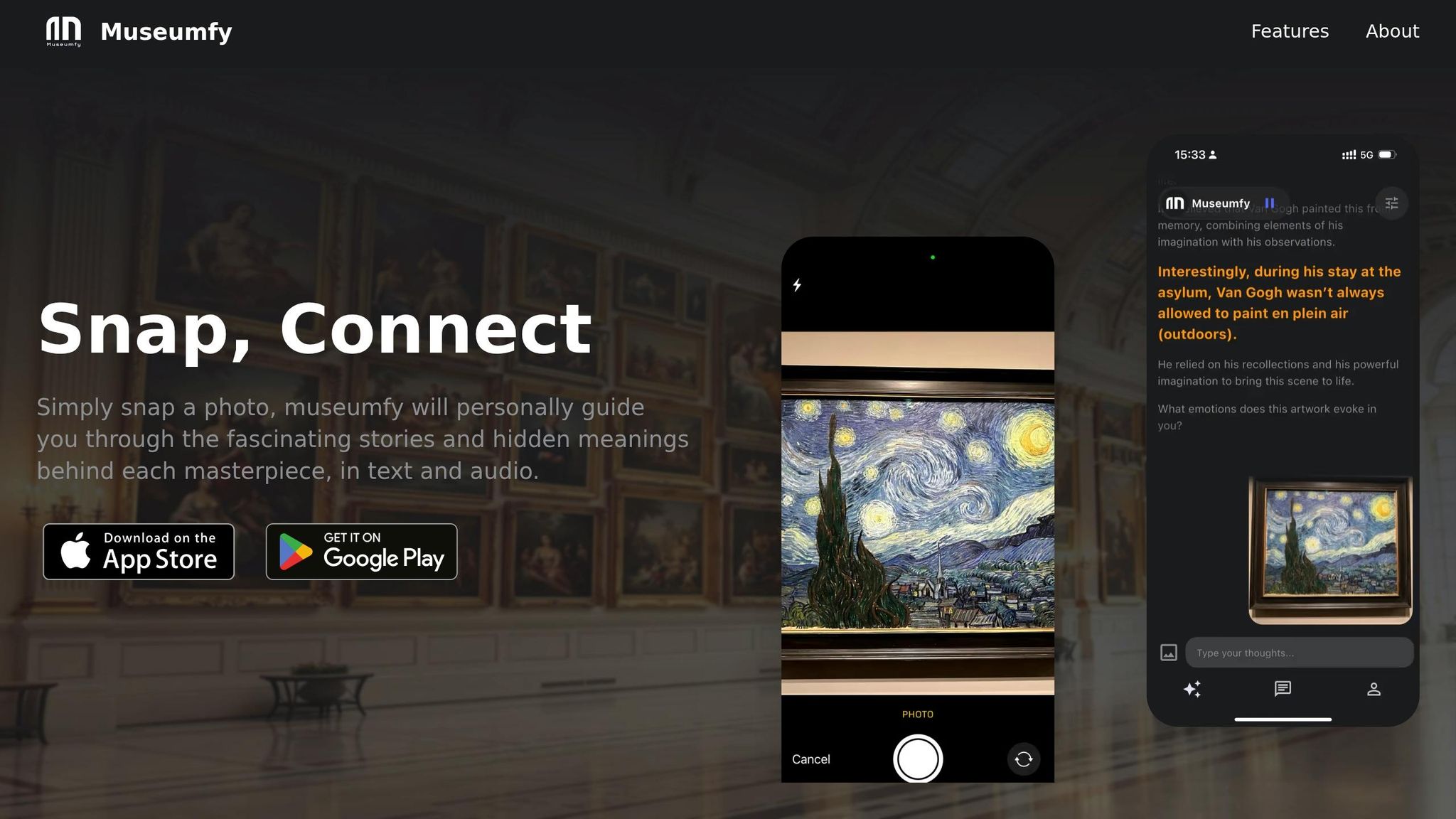
Museumfy takes a fresh approach to museum tours by using AI-powered translation directly through visitors' smartphones. Forget following a guide or dealing with pre-recorded audio tracks - just snap a photo and get instant, customized information. This modern solution bridges the gap between traditional tours and what today’s visitors expect.
Multilingual Support
With its photo-to-story technology, Museumfy opens the door to a wide range of languages - over 20, to be exact. Supported languages include English, Spanish, Mandarin, and Japanese. Thanks to recent updates, translations now happen in seconds, using advanced photo recognition to deliver quick and accurate explanations.
Cost
Museumfy offers flexible pricing to suit different needs:
- The Free Plan gives basic access, allowing up to 5 photo translations per month with text-based insights.
- The Premium Plan, priced at $9.99/month, unlocks unlimited photo translations, multilingual support, audio explanations, and adaptive learning.
- For institutions or groups, the Enterprise Plan offers custom pricing, advanced analytics, and priority support - making it a more budget-friendly option compared to traditional audio guide systems.
Personalization
Unlike traditional museum tours that deliver the same script to everyone, Museumfy brings a personal touch. Visitors can choose between quick highlights or in-depth historical details, depending on their interest and time. The AI learns from user preferences, tailoring content to match individual curiosity. This means every visitor gets a unique experience, customized to their level of engagement.
Accessibility
Museumfy works seamlessly on visitors' personal devices, whether it’s an iPhone, Mac, or Apple Vision Pro. This eliminates the need for shared equipment, improving hygiene, comfort, and cost-effectiveness. The app requires iOS 13.0 or later and supports visionOS 1.0 for Apple Vision Pro users. By using their own devices and headphones, visitors can adjust the volume to suit their needs and reduce background noise - making it especially helpful for those with hearing challenges.
Advantages and Disadvantages
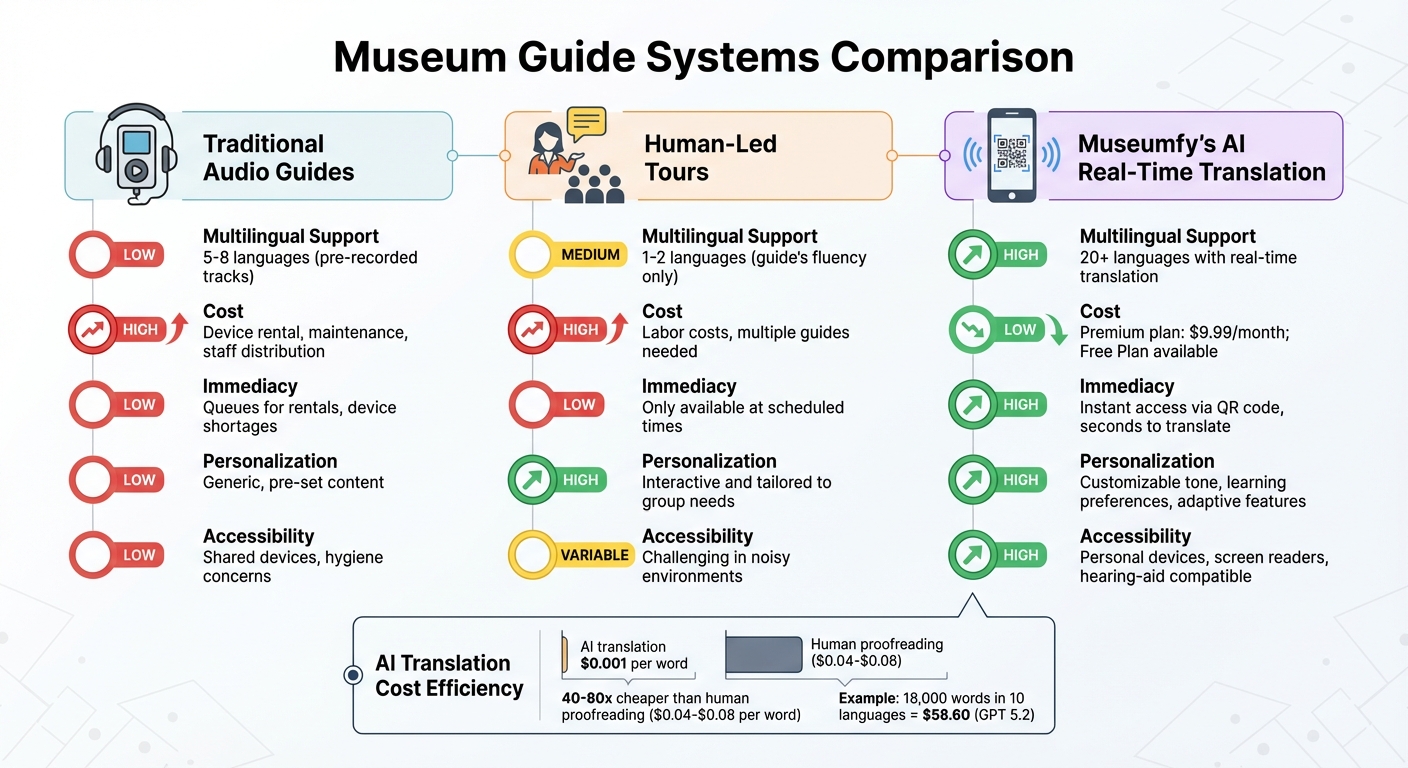
Comparison of Museum Guide Systems: Traditional Audio vs Human-Led vs AI Translation
Traditional audio guides rely on pre-recorded content, but they fall short when it comes to language variety and require expensive device upkeep. Human-led tours offer a more interactive experience, but they, too, are costly and limited by the guide's language skills. Museumfy's AI real-time translation addresses these challenges by offering instant, multilingual content directly to users' smartphones. The table below highlights the differences between these options.
| Feature | Traditional Audio Guides | Human-Led Tours | Museumfy's AI Real-Time Translation |
|---|---|---|---|
| Multilingual Support | Limited to pre-recorded tracks (usually 5-8 languages) | Restricted to guide's fluency (1-2 languages) | 20+ languages with real-time translation |
| Cost | High (device rental, maintenance, staff distribution) | High (labor costs, multiple guides needed) | Low (Premium plan: $9.99/month; Free Plan available) |
| Immediacy | Low (queues for rentals, device shortages) | Low (only available at scheduled times) | High (instant access via QR code, seconds to translate) |
| Personalization | Low (generic, pre-set content) | High (interactive and tailored to group needs) | High (customizable tone, learning preferences, adaptive features) |
| Accessibility | Low (shared devices, hygiene concerns) | Variable (challenging in noisy environments) | High (personal devices, screen readers, hearing-aid compatible) |
One of the standout benefits of Museumfy is its cost efficiency. A localization cost study conducted in January 2026 by Crowdin compared expenses for translating a SaaS product into 10 markets. This project included 3,000 words of app UI and 15,000 words of help center documentation. Using AI translation tools like GPT 5.2, the total cost for all 10 languages was just $58.60. In contrast, Claude Sonnet 4.5 cost $132.10. While these figures exclude human proofreading (priced at $0.04–$0.08 per word), AI translation costs averaged $0.001 per word - making it 40 to 80 times cheaper than professional human review alone.
As more individuals prefer using their personal devices, AI-powered platforms like Museumfy further outshine traditional systems, offering a modern, accessible, and cost-effective solution.
Conclusion
Looking at the comparison between traditional guides and human-led tours, it's clear that cultural institutions are rethinking how they connect with visitors. While audio guides and guided tours have been staples for years, they come with challenges like language barriers, high costs, and limited accessibility. Museumfy's AI real-time translation tackles these issues head-on, delivering instant, multilingual content directly to visitors' smartphones. This eliminates the hassle of renting devices and offers personalized narratives tailored to individual interests and learning preferences. It's a smart way to blend the old with the new, keeping up with the evolving expectations of museum-goers.
Consider this: 90% of Youth Summit attendees aged 16-25 felt museums were irrelevant due to generic, uncustomized interpretation. With visitors spending an average of just 28.63 seconds per artwork, there's a clear need for tools that transform these fleeting moments into deeper, more interactive experiences. AI-driven platforms can do just that, turning quick glances into engaging stories that resonate with each visitor.
But the benefits of AI tools go beyond multilingual access. They provide actionable insights into visitor behavior, helping museums fine-tune exhibits and marketing efforts based on real data. For example, the Norman Rockwell Museum saw a 150% boost in repeat visitors after using transactional data analytics. This shows how understanding your audience can lead to stronger connections and long-term growth.
The future of museum guides lies in blended experiences that merge human expertise with AI support. Imagine a single guide leading an international group, while each participant receives real-time translations in their native language. This approach keeps the personal touch of storytelling while breaking down language barriers, making museums more accessible. With 75% of European museums citing limited funding and staff as barriers to digitization, AI solutions like Museumfy offer a practical way to overcome these challenges.
Museums are shifting from passive displays to active, engaging experiences. AI-powered platforms make it possible to deliver personalized, inclusive, and interactive content that speaks to today's tech-savvy and diverse audiences - all without stretching budgets too thin. It's a win-win for cultural institutions and their visitors.
FAQs
How accurate is real-time translation in a busy museum?
Real-time translation tools in bustling museums generally achieve about 85% accuracy within five seconds of input. While this is impressive, minor mistakes or slight delays can happen, particularly when dealing with complex phrases or in noisy, crowded spaces. Tools like Museumfy improve accessibility and make exhibits more engaging for diverse audiences. However, visitors should be prepared for occasional inaccuracies and brief lags in such dynamic environments. Even with these limitations, they play a key role in enhancing multilingual museum experiences.
Do I need internet, or can it work offline?
You can use Museumfy offline by downloading the required content ahead of time. That said, an internet connection is usually needed to access real-time translation features.
What data does Museumfy collect when I scan a QR code or take a photo?
Museumfy gathers details about the webpage or app you visit after scanning a QR code or taking a photo. This can include things like URLs, feedback, survey answers, or social media links. However, it doesn’t collect personal information, such as your name or email, unless you voluntarily share it.