
Real-Time Translation: Accessibility for Global Visitors

Real-Time Translation: Accessibility for Global Visitors
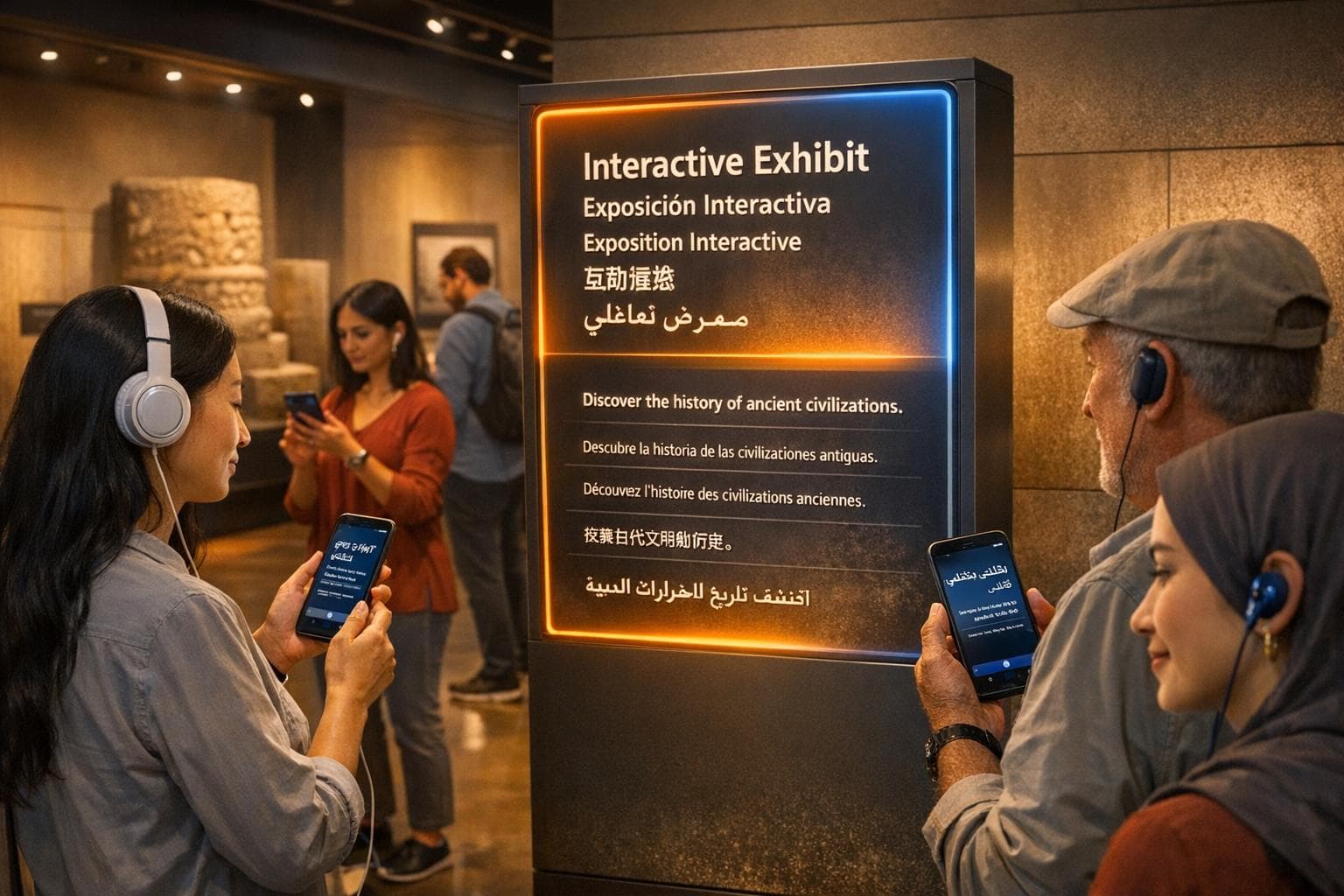
Museums often face a challenge: how to make exhibits understandable for visitors who speak different languages. Real-time translation technology offers a solution. Tools like Museumfy use AI to translate text and speech into over 20 languages, enabling visitors to access exhibit information in their native language. This technology works through mobile apps, smart glasses, and audio guides, breaking down language barriers and improving the experience for international and multilingual audiences.
Key Takeaways:
- Problem: Many museums provide information in only one or two languages, leaving non-native speakers with limited understanding.
- Solution: Real-time translation tools, such as Museumfy, offer instant translations via smartphones or other devices.
- How It Works: Snap a photo or use audio features to get exhibit details in your preferred language.
- Benefits:
- Improves accessibility for international visitors and local communities.
- Reduces the need for printed multilingual materials.
- Personalizes the experience based on user preferences.
Museums adopting these tools can better serve diverse audiences and create more engaging visits for everyone. Museumfy, for example, offers both free and premium plans to cater to different visitor needs, making this technology accessible and practical.
Museum Language Accessibility Statistics and Translation Benefits
Why Museums Need Real-Time Translation
How Language Barriers Limit Museum Visits
Imagine walking into a museum filled with stunning exhibits, only to find that the descriptions and materials are in a language you don’t understand. This is the reality for many international visitors. Most museum content is offered in just one or two languages, leaving many people unable to fully connect with the exhibits.
This issue isn’t just about missing a few interesting details. Without translations in their native language, visitors lose access to vital context, subtle cultural meanings, and the deeper stories behind the displays. For example, artistic wordplay or traditions tied to local history often go unnoticed without proper translation.
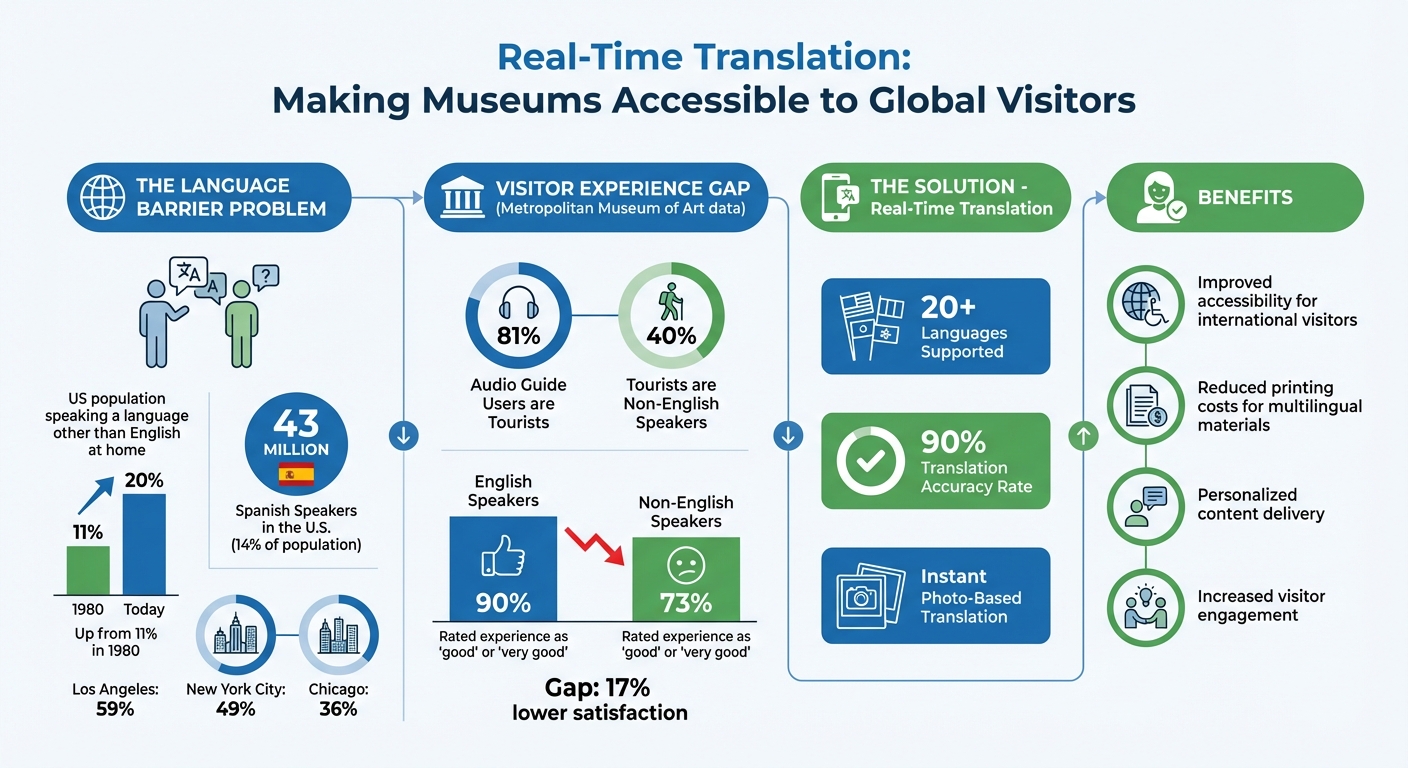
The challenge isn’t limited to international tourists - it also affects local communities. In the United States, where 20% of the population speaks a language other than English at home, museums are missing an opportunity to engage millions. Spanish speakers alone account for about 43 million people, or 14% of the population. Yet, many museums still primarily cater to English-speaking audiences, unintentionally sidelining a significant portion of potential visitors.
Take The Metropolitan Museum of Art as an example. They found that 81% of their audio guide users were tourists, and 40% of those tourists were non-English speakers. While 90% of English-speaking visitors rated their experience as "good" or "very good", only 73% of non-English speakers felt the same way. Grace Tung, a Digital Media Contributor at the Met, pointed out:
"The Audio Guide's relatively small foreign-language offer has a negative impact on this particular subgroup of visitors... our first-time foreign-language users often feel 'underserved'"
Real-time translation tools can help close this gap, offering a seamless way to overcome language barriers.
Making Museums Accessible to International Visitors
Real-time translation is changing the game for museums, making them more inclusive for global audiences. Instead of relying on pre-recorded audio guides in just a few major languages, AI-powered systems can instantly provide translations in dozens of languages, from Spanish and Mandarin to Arabic and more.
Museums across the U.S. are starting to embrace this shift toward language accessibility. Madeleine Grynsztejn, Director of the Museum of Contemporary Art Chicago, highlighted its importance:
"Without advancing language access, I feel we will fall short on our mission to center artist and audience relationships and widen the circle to include as many people as possible"
Listening to visitor feedback, The Metropolitan Museum of Art took action by committing to translate 300 audio stops into nine languages, resulting in 2,700 new translated stops by summer 2015. While this was a major step forward, it demanded significant time and effort - challenges that real-time AI translation can now address far more efficiently.
How Museumfy's Real-Time Translation Works
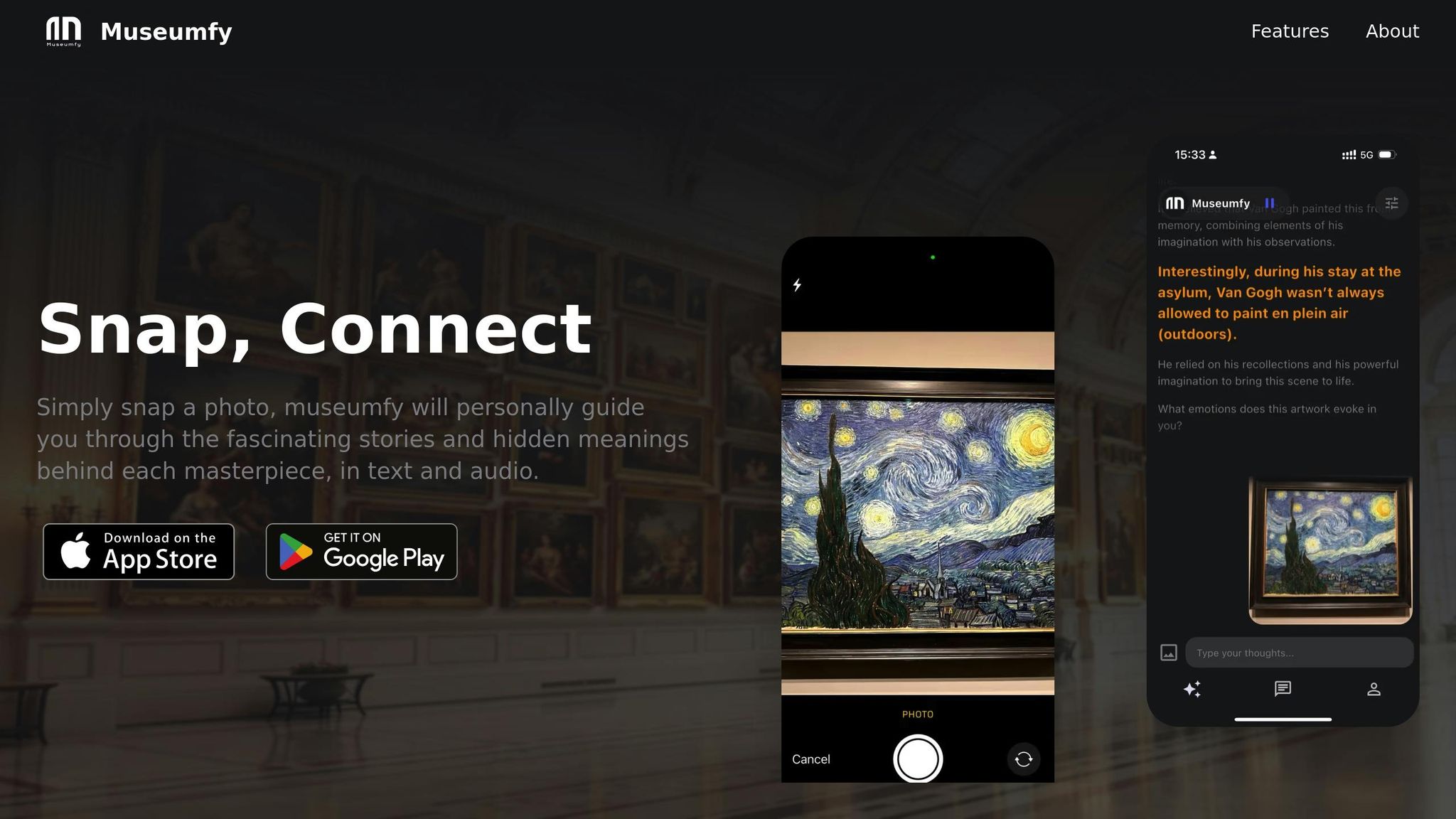
Photo-Based Translation in Over 20 Languages
With Museumfy, you can snap a photo of an exhibit and instantly get text and audio explanations in over 20 languages. The AI behind the app identifies the artwork and provides content in your chosen language - options include Spanish, Mandarin, Arabic, French, and more.
The platform boasts a 90% accuracy rate, delivering translations that stay true to both the language and the cultural nuances of the original content. Unlike traditional guides that rely on pre-recorded scripts, Museumfy offers dynamic, engaging interpretations that uncover hidden details and historical context.
Getting started is simple: download the app and select your preferred language before heading to the museum. For the best experience, bring headphones and ensure your phone is fully charged. The app’s dual approach lets you read detailed text explanations while exploring exhibits or listen to audio interpretations for a hands-free journey. Plus, it adjusts the content to align with your unique interests, making every visit more meaningful.
Personalized Content Based on User Preferences
Museumfy goes beyond simple translation - it adapts to how you like to learn, making exhibits more accessible for everyone. When setting up the app, you can share your interests, like favorite artists, art styles, or historical periods. Using this input, the app customizes each explanation to match your curiosity and preferred learning style.
Whether you prefer quick summaries or in-depth insights, Museumfy adjusts accordingly. Love Renaissance art? The app will dive deep into the techniques and influences of that era. The more you use Museumfy, the better it gets at tailoring content to your tastes, offering an increasingly personalized experience with each visit.
Pricing Options for Different Visitors
Museumfy offers flexible pricing to suit a variety of visitors. The Free Plan provides basic access, allowing up to 5 photo translations per month along with text explanations.
For $9.99 per month, the Premium Plan unlocks unlimited photo scans, full multilingual support for all 20+ languages, audio explanations, and adaptive learning features that adjust to your viewing habits. For museums and educational institutions, the Enterprise Plan offers custom pricing with advanced analytics, tailored integrations, and priority support - ensuring that every visitor can enjoy insightful, accessible content.
Benefits for Museums and International Visitors
Improved Visitor Experience and Engagement
AI-powered translation doesn't just bridge communication gaps - it transforms how international visitors experience museums. When visitors can explore exhibits in their native language, they connect more deeply with the stories behind the artwork and artifacts. Take The Metropolitan Museum of Art, for instance: 81% of its audio guide users are tourists, and 40% of those are non-English speakers. Visitors who use translation tools often describe their museum experience as exceeding expectations.
"The Audio Guide has shown itself to be the perfect conduit for conveying this deeper sort of engagement by delivering stories full of emotion, excitement, and character; it helps to foster a more intimate connection between the Museum and the visitor."
- Grace Tung, Digital Media Department, The Metropolitan Museum of Art
Real-time translation makes exhibits more accessible by providing context, historical background, and artistic details that might otherwise be overlooked. This technology allows visitors to explore at their own pace, without the frustration of language barriers. Beyond improving engagement, it’s also a smart way for museums to appeal to a broader international audience.
Attracting More International Visitors
Multilingual technology opens doors to new audiences, making museums more inclusive and boosting international attendance. Offering robust language support helps museums tap into growing tourism markets, creating a welcoming environment for visitors from around the globe.
Additionally, real-time translation streamlines operations. Instead of relying on printed brochures or physical exhibit labels in multiple languages, tools like Museumfy deliver tailored content directly to visitors' smartphones. This approach not only reduces printing costs but also minimizes environmental impact. By adopting digital solutions, museums enhance the visitor experience while encouraging increased spending on secondary offerings like gift shops and cafes.
sbb-itb-e44833b
What's Next for AI Translation in Museums
New AI Translation Capabilities on the Horizon
AI translation is pushing boundaries, introducing tools that could redefine how people experience museums worldwide. Imagine wearing smart glasses that project translations directly onto exhibits or enjoying guided tours with seamless, conversational voice translations. These advancements, including improved speech-to-speech synthesis, are becoming a reality. AI is also getting smarter at understanding spatial context and regional dialects, delivering translations that feel more accurate and natural. These developments hint at exciting changes ahead for cultural tourism.
Building a More Accessible Global Tourism Industry
AI translation isn’t just about enriching museum visits - it’s also transforming the broader landscape of global tourism. In the United States, for instance, 21% of people speak a language other than English at home, a striking increase from 11% in 1980. In cities like Los Angeles, New York City, and Chicago, these numbers climb even higher - 59%, 49%, and 36% respectively. Platforms like Museumfy are tackling this diversity head-on, making art and history accessible to everyone, no matter what language they speak.
The future of translation could blend text, audio, and even sign language into a unified experience. For example, AI-powered avatars might provide digital sign language interpretation for visitors who are deaf or hard of hearing. Meanwhile, adaptive content could adjust in real time - simplifying language for kids or offering cognitive support for those with learning disabilities. Jill Bishop, Founder & CEO of Multilingual Connections, emphasizes the importance of this approach:
"By prioritizing accessibility, museums promote equal opportunities for individuals with different language backgrounds, disabilities, or specific needs to engage and connect with the exhibits."
Spoken Language Identification | intelligent.museum
Conclusion
Real-time translation is transforming how museums connect with a global audience. Platforms like Museumfy break down language barriers, making art and history accessible to everyone. With just a quick photo, visitors can access explanations in over 20 languages, ensuring exhibits are approachable and engaging for all.
This technology is reshaping how museums interact with diverse audiences. Multilingual accessibility benefits not only international travelers but also local communities. Considering that around 21% of U.S. households speak a language other than English at home, this innovation meets the needs of a broad and varied population. Jill Kushner Bishop, Founder & CEO of Multilingual Connections, highlights this impact perfectly:
"If a museum can translate content into the languages of its community, it tells them that they're welcome and increases overall accessibility."
FAQs
How does real-time AI translation improve the museum experience for international visitors?
Real-time AI translation is transforming museums into more welcoming spaces by eliminating language barriers for international visitors. It enables instant translation of exhibit descriptions, audio guides, and even conversations with staff, ensuring that visitors can grasp the cultural and historical significance of what they’re experiencing.
With this technology, visitors enjoy a personalized experience, receiving accurate translations in their preferred language as they explore. By simply selecting their language in the app, they gain access to consistent text or audio translations throughout their visit. This not only makes the experience more engaging but also creates stronger connections with the exhibits, allowing museums to better cater to a diverse, global audience.
What do I need to use Museumfy’s real-time translation features?
To make the most of Museumfy’s real-time translation feature, you’ll need a smartphone or tablet (iOS or Android) with the Museumfy app installed, along with an active internet connection - either through Wi-Fi or cellular data. For the best experience, ensure your device has a working microphone, speaker (or headphones), and camera. These are essential for features like spoken translations and analyzing artwork through photos.
Many museums provide QR codes or NFC tags to quickly activate the translation feature. However, the essentials remain the same: a modern mobile device, the Museumfy app, and a reliable internet connection throughout your visit.
How does Museumfy create a personalized museum experience?
Museumfy leverages advanced AI to craft a personalized experience for each visitor. Whether through detecting or allowing users to select their preferred language, it ensures exhibit descriptions, text captions, and audio narrations are available in that language throughout the visit. On top of that, the platform keeps track of visitor interactions - like artworks they photograph or topics they explore - to suggest tailored recommendations and learning paths aligned with their interests.
In addition to language options, Museumfy caters to accessibility needs by tweaking features like text size, voice tone, and pacing. It can also recommend related exhibits or dive deeper into artistic styles and themes that resonate with the visitor’s preferences. These thoughtful touches make museum visits engaging, inclusive, and enjoyable for everyone.