
Personalized Learning in Museums: Guide

Personalized Learning in Museums: Guide
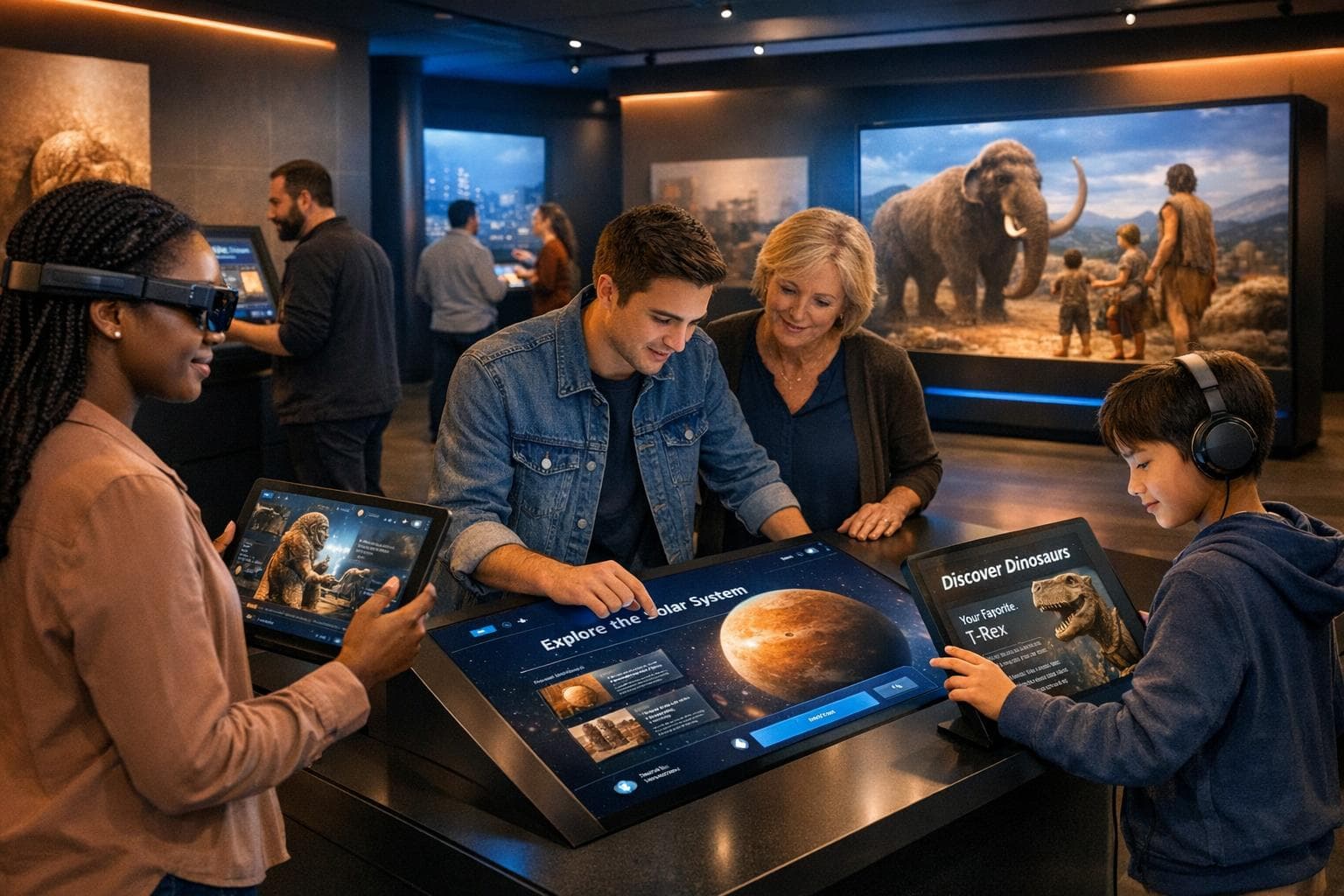
Museums are transforming how visitors engage with exhibits by using AI and real-time data to create personalized experiences. Instead of offering the same information to everyone, new systems tailor content based on your interests, learning style, and expertise.
Here’s what’s happening:
- AI tools like Museumfy allow you to snap a photo of an artwork and instantly access customized explanations in over 20 languages.
- Behavior tracking (e.g., time spent on exhibits, movement patterns) helps museums recommend exhibits that match your preferences.
- Personalized content delivery ensures visitors get the right level of detail - whether they’re casual tourists or subject matter experts.
- Accessibility improvements include multilingual support and features for diverse learning styles.
Studies show these systems increase engagement, reduce visitor drop-off rates, and even improve museum operations like crowd management. While privacy and ethical concerns exist, museums are addressing them through transparent data practices and AI fairness.
AI-powered personalization isn’t just about technology - it’s about making visits more engaging and meaningful for everyone.
How Can AI Personalize Your Museum Tour Experience? - Inside Museum Walls
sbb-itb-e44833b
How Adaptive Learning Algorithms Improve Museum Experiences
How Adaptive Learning Algorithms Work in Museums: 3-Model System
Adaptive learning algorithms are reshaping how we experience museums by offering real-time, personalized content. These smart systems analyze visitor behavior - like how long you linger in front of an artwork, the path you take through galleries, or which displays catch your attention - and adjust the content accordingly. Through this data, they create a profile of your interests and expertise, helping to recommend exhibits that align with your preferences. Let’s dive deeper into how these systems work and the benefits they bring.
How Do Adaptive Learning Algorithms Work?
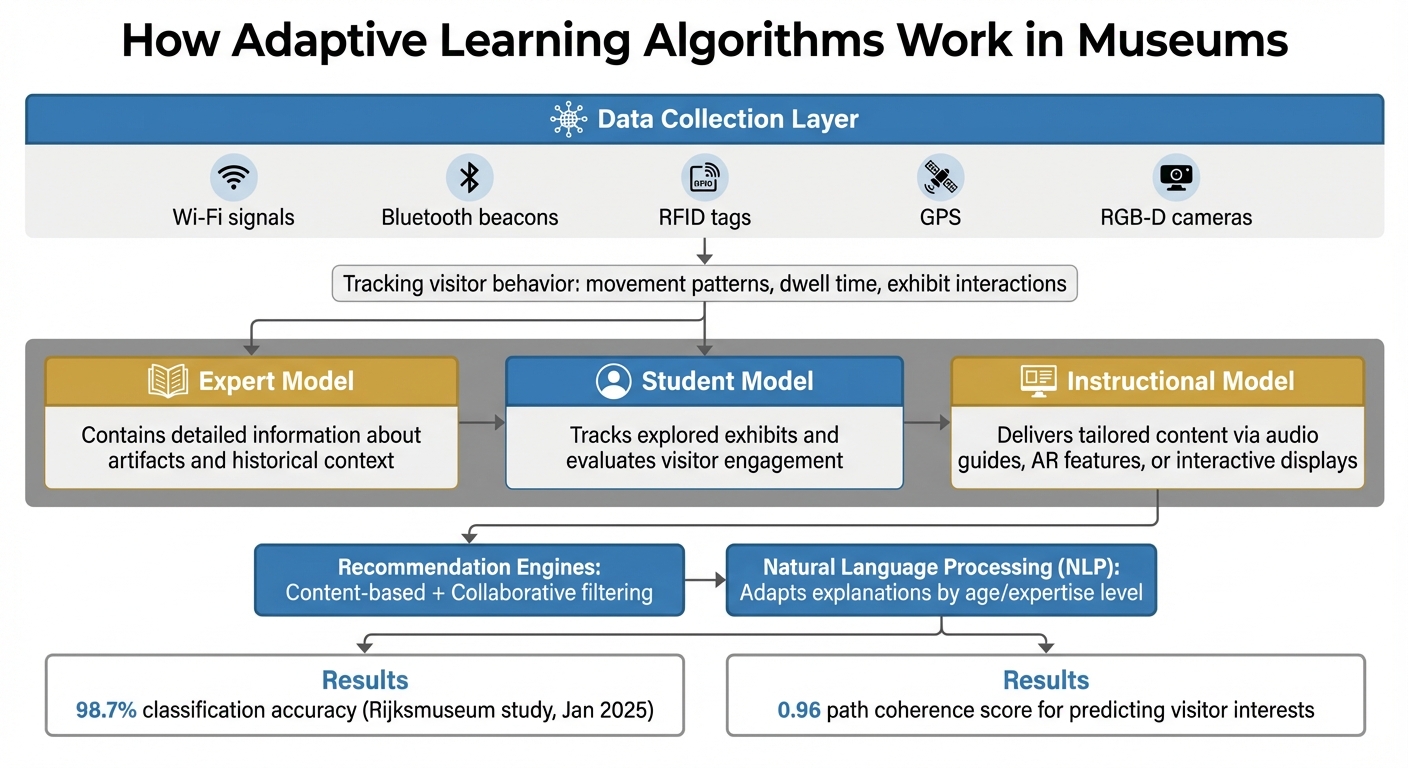
These algorithms rely on three core models working together:
- Expert Model: Contains detailed information about artifacts and their historical context.
- Student Model: Tracks which exhibits you've explored and evaluates your engagement.
- Instructional Model: Delivers tailored content, whether through audio guides, augmented reality (AR) features, or interactive displays.
The system collects data using tools like Wi-Fi signals, Bluetooth beacons, RFID tags, GPS, and RGB-D cameras. For instance, if you're using a museum app or simply walking up to an exhibit, these technologies capture your interactions. Computer vision, through 3D pose estimation, can even identify which artwork you're viewing.
Once the data is gathered, recommendation engines process it using a mix of content-based and collaborative filtering techniques. Natural Language Processing (NLP) plays a key role in personalizing the experience. For example, a child might receive a fun, story-driven explanation, while an art history professor gets an in-depth analysis of brushwork. Additionally, NLP can analyze sentiment from social media or reviews to understand what resonates with different visitor groups.
A noteworthy example comes from January 2025, when researchers tested a Modified Random Forest framework using the Rijksmuseum’s visitor behavior dataset. The results? An impressive 98.7% classification accuracy and a 0.96 path coherence score in predicting visitors' next interests.
Benefits of Adaptive Learning in Museums
The impact of these systems goes beyond just convenience - they enhance the entire museum experience. Adaptive learning has been shown to significantly boost visitor engagement, with 86% of studies reporting improved learning outcomes. When exhibits match your interests and knowledge level, it’s easier to stay captivated.
"By using machine learning, museums can now offer visitors personalized tours, creating experiences based on each individual's interests and preferences."
Another advantage is improved accessibility. These systems provide multilingual support and adapt to different learning styles, whether you prefer visual, textual, or auditory content. Take Museumfy’s platform, for example - it uses image recognition to let visitors snap a photo of an artwork and receive detailed explanations in over 20 languages.
Adaptive algorithms also help with crowd management. By analyzing movement patterns, tools like Deep Q-Networks can reduce congestion and optimize gallery layouts. AI-driven changes have improved spatial flow by 18.1% and increased exhibit visit rates by 50.0%. These systems can distinguish between natural clustering around popular pieces and inefficient crowding, redirecting visitors as needed. For instance, a dwell time of three seconds or more often signals genuine interest, and density thresholds - like 0.28 people per square foot for VR zones - help maintain a comfortable viewing experience.
Finally, these systems tackle a common issue: visitor drop-off. Nearly 28.9% of people abandon museum tours halfway through, often due to boredom with uninteresting exhibits. By continuously refining recommendations, adaptive learning ensures you spend more time with displays that truly engage you.
Museumfy: AI-Powered Personalized Museum Learning
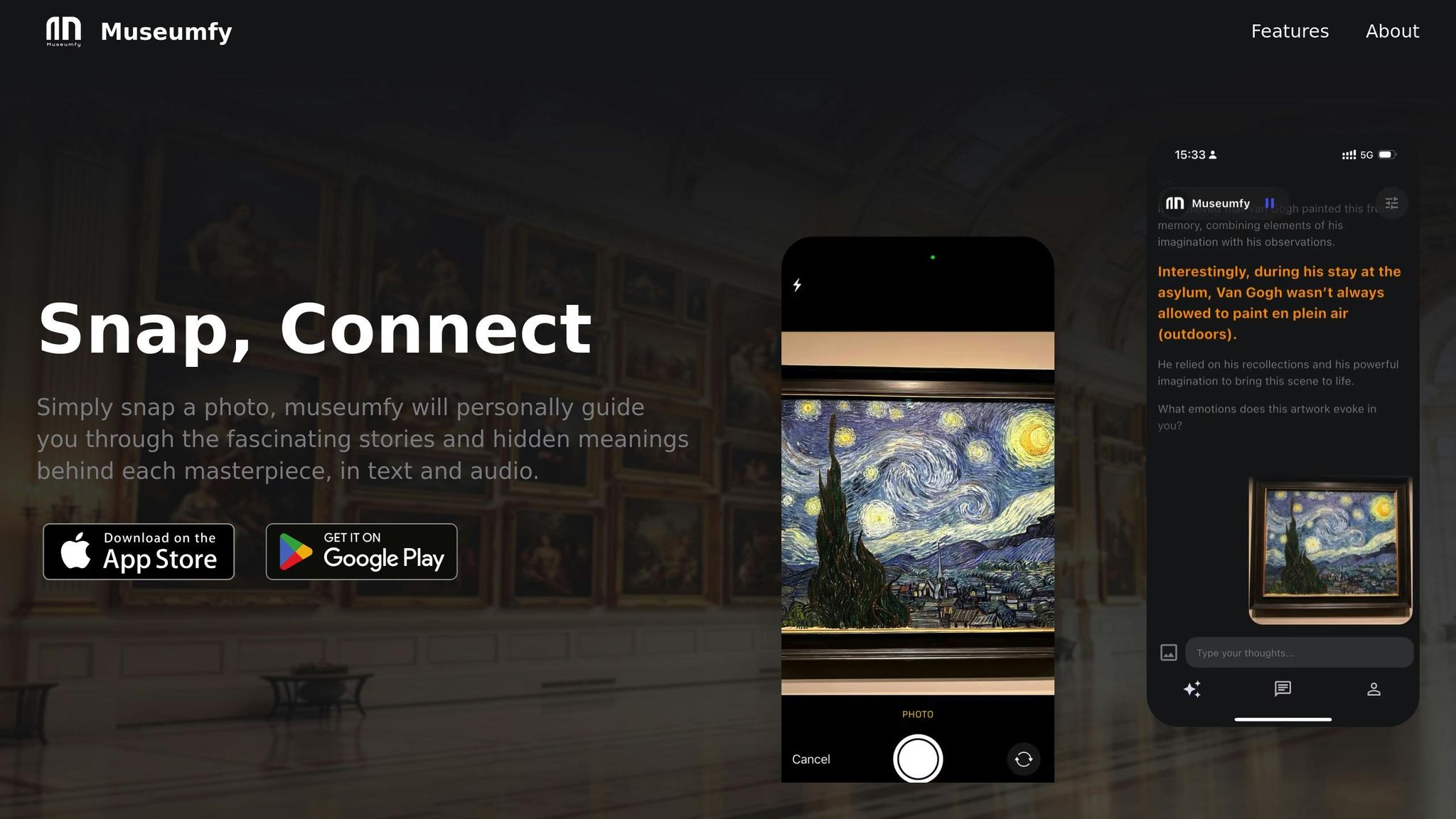
Museumfy transforms the typical museum visit into a personalized, interactive experience by using AI-driven adaptive learning. Forget about generic audio guides or static plaques - this app lets you snap a photo of an exhibit and instantly receive content tailored to your interests and knowledge level. With its vision-based recognition technology, Museumfy identifies exhibits in real time and delivers explanations in over 20 languages, available in both text and audio formats. It’s a fresh approach that blends traditional museum tours with modern, dynamic engagement.
The app doesn’t stop at just identifying exhibits. It learns as you explore. By tracking your interactions - like which exhibits you focus on and how long you spend with each one (known as "dwell time") - Museumfy builds a profile of your preferences. Using advanced recommendation algorithms, it suggests exhibits that align with your interests. For instance, a casual visitor might enjoy story-driven narratives, while an art history enthusiast could dive into detailed analyses of artistic techniques and historical context.
Museumfy starts with basic preferences and refines its suggestions based on your interaction patterns, ensuring every visit feels unique and engaging.
Key Features of Museumfy
Museumfy’s standout features are designed to make your museum visit seamless and enriching:
- Photo-Based AI Technology: Simply point your smartphone camera at an exhibit, and Museumfy identifies the object using RGB input and its exhibit database. No need to scroll through menus or type in names - just snap a photo, even from different angles, and let the app do the rest.
- Multilingual Support: Beyond basic translation, Museumfy tailors content to your locale. It adjusts language, cultural references, and even date formats to match your preferences. Audio explanations are optimized for voice-assisted search patterns, recognizing the growing trend of voice queries, which now account for about 20% of searches.
- Adaptive Learning: The app uses reinforcement learning to refine your experience. For example, if you spend extra time exploring Impressionist art, Museumfy will prioritize similar exhibits and provide deeper insights into that movement. It’s like having a personal curator in your pocket.
Museumfy Pricing Plans
Museumfy offers three flexible plans to suit different needs, whether you’re a casual visitor, a frequent museum-goer, or a museum institution:
| Plan | Price | Key Features | Best For |
|---|---|---|---|
| Free | $0 | Photo-based AI, text explanations, basic language support | Visitors on short, occasional trips |
| Premium | $9.99/month | Unlimited photo scans, 20+ languages, audio explanations, adaptive learning | Regular museum-goers and tourists |
| Enterprise | Custom pricing | Museum-wide integration, visitor analytics dashboard, custom CMS, priority support | Museums and cultural organizations |
The Free Plan gives casual visitors a chance to explore with up to 5 photo scans per month and text-based explanations. For $9.99/month, the Premium Plan unlocks unlimited scans, audio guides, and advanced adaptive learning - ideal for frequent visitors or travelers. Meanwhile, the Enterprise Plan offers museums a full suite of tools, including a content management system and analytics dashboard, to enhance visitor engagement and streamline operations.
With Museumfy, every museum visit becomes a personalized journey, tailored to your curiosity and interests.
Steps for Museums to Implement Personalized Learning Tools
Implementation Process
Bringing personalized learning tools into museums involves a step-by-step strategy that carefully balances technology, ethical considerations, and visitor satisfaction. The first step is setting clear goals, such as improving visitor engagement, managing foot traffic, or boosting revenue. These goals should be paired with measurable performance indicators like satisfaction scores or dwell time.
To get started, museums need to establish a solid data infrastructure. This includes installing hardware like BLE beacons and gateways to track visitor movement and time spent at exhibits in real-time. Additionally, a content management system (CMS) is essential for linking multimedia content - such as text, audio, video, or interactive games - to specific exhibits. For instance, a museum in Minneapolis revamped its data collection process to better segment and understand its audience.
Once the data infrastructure is in place, the next step is selecting and integrating the right AI tools. Options include Contextual Bandits for real-time recommendations, Deep Q-Networks for optimizing spatial layouts, or Modified Random Forests for personalized tours. A study conducted in January 2025 using visitor data from the Rijksmuseum demonstrated the effectiveness of a Modified Random Forest framework, achieving 98.7% classification accuracy and a 0.96 path coherence score for adaptive tours.
Before rolling out these tools on a large scale, museums should pilot test them with a limited number of exhibits. For example, the Herakleidon Museum in Athens used the MuseLearn platform during its "Ancient Greek Technology" exhibition in 2019. This platform employed pose estimation via mobile cameras to identify exhibits, achieving an average precision of 0.947 for exhibit recognition. Visitors also showed strong interest in using the accompanying mobile app for navigation. These small-scale trials allow museums to fine-tune their systems without overextending resources.
As these systems grow and improve, ethical considerations must remain a top priority. Museums should adopt transparent data collection practices, such as OAuth logins, to gather basic demographic information before refining profiles with behavioral data. A quote from data scientist Cathy O'Neil serves as a reminder of the importance of ethical oversight:
"Algorithms are opinions embedded in code"
To ensure fairness and compliance, museums must design systems that are unbiased, adhere to regulations like GDPR, and clearly inform visitors about how their data is being used. Regular updates based on user feedback and real-time analytics will help these systems stay relevant and responsive to evolving visitor needs.
Challenges and Ethical Considerations
Addressing Privacy and Data Security
Museums that use adaptive learning systems gather a wealth of visitor data. Tools like BLE beacons and smart badges track movement, dwell time, and interactions, creating detailed behavioral profiles of visitors. When combined with features like OAuth registration or surveys, museums also collect personal information such as age, gender, hometown, and individual interests.
However, this level of data collection brings significant security concerns. IoT devices like BLE beacons and smart badges can serve as vulnerable entry points for hackers. To address these risks, museums must implement strong security measures and ensure transparency in their data collection processes. Visitors should clearly understand what data is being collected and how it will be used.
Using privacy-focused techniques like anonymization can help museums strike a balance between personalization and visitor protection. Explainable AI systems can further build trust by clarifying the reasoning behind specific recommendations. While safeguarding visitor data is crucial, museums must also ensure that these systems remain inclusive and accessible to all.
Ensuring Accessibility for All Visitors
Equitable access is just as important as privacy. Algorithmic bias poses a challenge to creating fair museum experiences. Issues like the "cold start" problem can lead systems to rely on stereotypes instead of actual visitor preferences, potentially excluding or misrepresenting certain groups.
To address this, museums should train AI systems on diverse datasets that reflect a wide range of ages, genders, ethnicities, and abilities. Reducing bias not only makes the system fairer but also improves its overall performance. Multilingual support is another critical factor. Platforms like Museumfy, which offer content in over 20 languages, make museums more accessible to international visitors and non-native speakers.
Accessibility also involves thoughtful design for physical and cognitive needs. For example, museums can include fields in visitor profiles to identify specific impairments, allowing systems to tailor content for individuals with mobility or sensory challenges. Features like voice-activated systems and user-friendly interfaces can empower visitors with visual or motor impairments to navigate independently. Additionally, offering varying content levels - from beginner-friendly to more advanced - ensures that all visitors can explore at their own pace, regardless of their background knowledge.
Conclusion: The Future of Personalized Museum Learning
Modern adaptive learning algorithms are reshaping how we experience museums, offering dynamic, personalized interactions. By analyzing factors like how long visitors linger at exhibits, their movement patterns, and how they engage with displays, these systems adjust in real time to cater to individual interests.
Studies show that this kind of personalization doesn’t just make visits more engaging - it also improves how museums function. For example, AI-driven models have boosted exhibit visit rates by 50% by tweaking layouts based on live visitor data, ensuring smoother gallery flow and better overall experiences.
One standout example of this technological shift is Museumfy, a platform that combines advanced AI with the simplicity of everyday museum visits. Supporting over 20 languages and offering instant insights from photos, it brings cutting-edge tools to visitors in an intuitive way. This aligns with a broader movement to make digital innovations feel more human - enhancing, rather than overshadowing, the emotional and intellectual connection people have with art and history.
Elizabeth Merritt, Director of the American Alliance of Museums' Center for the Future of Museums, captures this sentiment perfectly:
"Any time you talk about an emerging technology, museums have an important role to play teaching the public about it. Artificial intelligence is going to be incredibly important in shaping the world we live in, in profound ways. We need to understand the technology and the issues it raises."
- Elizabeth Merritt
As technology progresses, its true potential lies in fostering deeper connections between people and culture. The challenge - and opportunity - moving forward is to use AI not as a replacement but as a tool to enrich these human experiences, ensuring that innovation works hand in hand with inclusivity and equity in museum learning.
FAQs
How do adaptive learning algorithms enhance museum visits?
Adaptive learning algorithms are transforming museum visits by creating experiences tailored to each visitor. These systems analyze behaviors such as how long someone lingers at an exhibit, their movement patterns, and how they prefer to engage - whether through reading, listening, or interacting. By leveraging advanced machine learning, the algorithms identify individual interests, fill knowledge gaps, and adapt to preferred learning styles in real time.
For instance, these systems can adjust the depth of information provided, switch between text or audio formats, or even change languages to suit a visitor's needs. As the visit unfolds, the algorithms continuously refine their recommendations - offering more detailed insights for exhibits that spark curiosity or simplifying content when necessary. This dynamic approach ensures that every guest enjoys an experience that feels engaging, intuitive, and uniquely suited to them.
Museumfy brings this concept to life by enabling visitors to snap a photo of an exhibit and instantly receive a tailored explanation. With real-time data analysis and support for multiple languages, the platform transforms a typical museum visit into a personalized learning adventure, perfectly aligned with each visitor's pace and curiosity.
How do museums ensure visitor privacy when using AI technology?
Museums are making strides to tackle privacy concerns tied to AI-driven personalization. A growing number now include clear privacy notices that explain how data - like website interactions - is collected through cookies. This data is often used for analytics, enhancing user experiences, and customizing content.
Visitors typically have the choice to accept, reject, or adjust data collection preferences via cookie-consent banners. Detailed privacy policies also explain how data is managed, stored, and safeguarded, aligning with U.S. standards for informed consent and data protection. These efforts aim to build trust while improving the overall visitor experience.
How does Museumfy make museum visits more accessible for everyone?
Museumfy makes museum visits more inclusive by offering multilingual explanations in over 20 languages, available as both text and audio. With just a photo of an artwork, visitors can access detailed insights that reflect a variety of cultural perspectives. This feature not only bridges language gaps but also provides audio descriptions, making exhibits more accessible for individuals who are blind or have low vision.
The platform goes a step further by tailoring content to suit different visitor profiles. Whether someone is a child, a casual museum-goer, or a dedicated researcher, Museumfy adjusts the depth and delivery of information to match their needs. By doing so, it caters to diverse learning styles and keeps the experience engaging. For those with motor impairments, hands-free interaction options enhance usability and convenience.
Museumfy’s smart recommendations add another layer of personalization, suggesting less crowded routes and highlighting exhibits that align with a visitor’s preferences or accessibility requirements. These thoughtful features ensure that everyone can enjoy a seamless, enriching, and stress-free museum experience.