
Guide: Frida Kahlo’s Month in Paris & Mary Reynolds

Guide: Frida Kahlo’s Month in Paris & Mary Reynolds
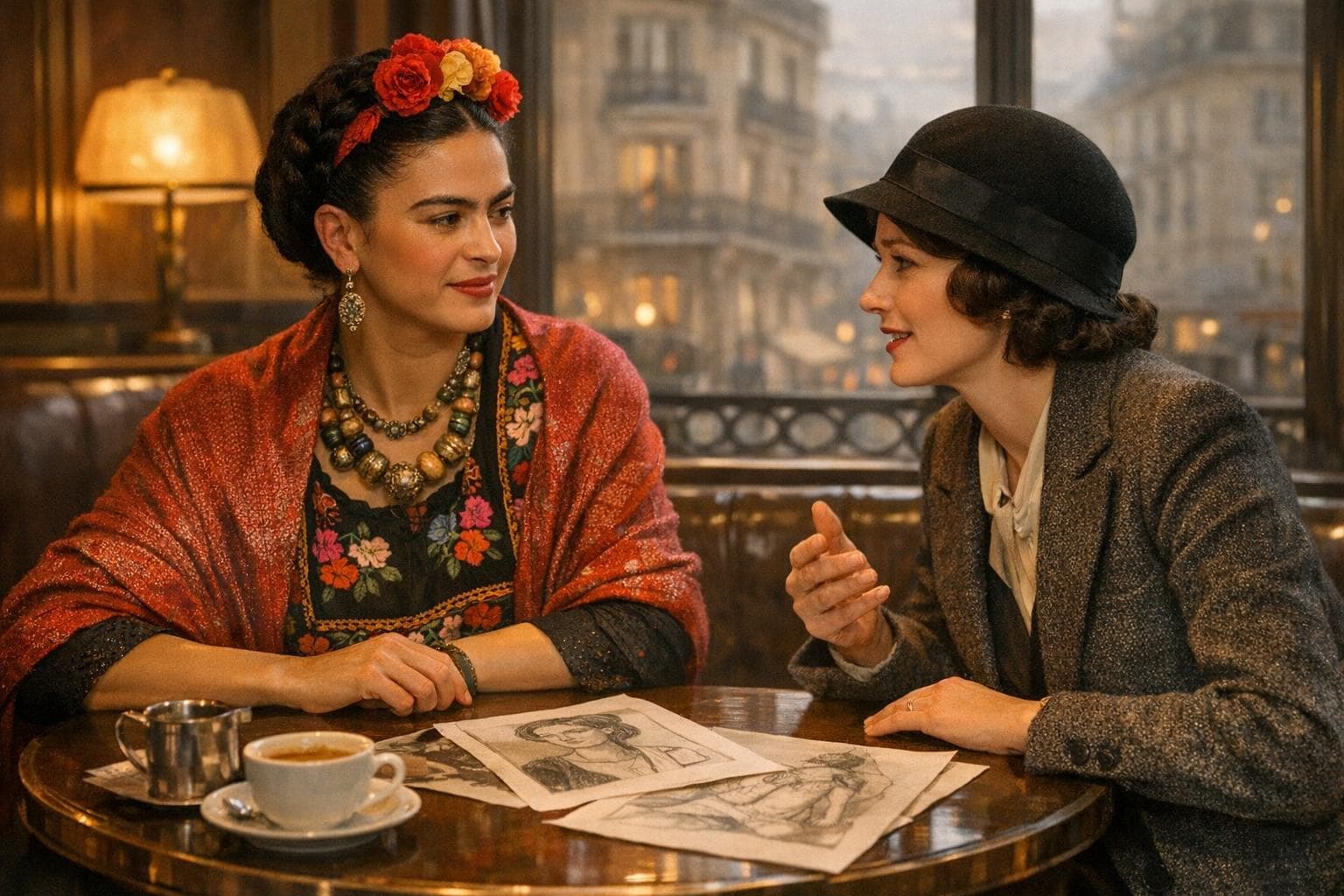
Frida Kahlo’s month-long stay in Paris during 1939 is an often-overlooked yet fascinating chapter of her life. It was a period where the iconic Mexican artist, renowned for her deeply personal and symbolic works, intersected with the European avant-garde, forming a unique bond with Mary Reynolds - a surrealist bookbinder, collector, and critical member of Paris' artistic circles. This article delves into Kahlo’s experiences, the challenges she faced, her collaborative relationship with Reynolds, and the cultural exchanges that emerged from this pivotal moment in art history.
Setting the Stage: Frida Kahlo’s Journey to Paris
Frida Kahlo’s singular trip to Europe emerged from an invitation by André Breton, the French surrealist leader, to showcase her work in Paris. By 1938, Kahlo was beginning to solidify her reputation as an artist, having exhibited at the Julien Levy Gallery in New York. This successful show marked a significant turning point in her career, with critics acknowledging her distinctive fusion of personal narrative and surrealism. Yet, Kahlo’s foray into Paris would prove more tumultuous than anticipated.
Breton envisioned Kahlo as a surrealist icon, but their collaboration soured quickly. The exhibition, originally promised as a solo show, devolved into a larger thematic group exhibition titled "Mexique", blending Kahlo’s paintings with Mexican folk art, pre-Columbian objects, and other works. This was compounded by logistical issues - Kahlo’s paintings were stuck in customs for weeks - and frustrations with Breton’s disorganized nature. Feeling betrayed and out of place, Kahlo nearly abandoned the exhibition before finding refuge in the home of Mary Reynolds.
Mary Reynolds: The Unsung Hero of Avant-Garde Paris
Mary Reynolds was a remarkable figure - a Chicago-born artist who became a central force in the Parisian surrealist movement. Her home on Rue Hallé (shared with her partner, Marcel Duchamp) became an intellectual and social hub for avant-garde artists and writers, including figures like Brancusi, Man Ray, and Jean Cocteau. Reynolds’ practice as a bookbinder was deeply innovative, blending surrealist aesthetics with traditional craftsmanship to create singular works of art.
Reynolds’ support of Kahlo during her Parisian stay was instrumental. Facing illness and cultural isolation, Kahlo found a kindred spirit and caretaker in Reynolds, who invited her to stay at her home. This act of hospitality not only salvaged Kahlo’s Parisian experience but also set the stage for a rich artistic exchange between the two women.
sbb-itb-e44833b
The Exhibition "Mexique" and Parisian Connections
Despite her frustrations, Frida Kahlo’s work made a significant impact in Paris. The exhibition "Mexique" showcased her paintings alongside works by Diego Rivera, Manuel Álvarez Bravo, and other artists, with a focus on Mexican art and culture. Among the highlights was The Frame, a striking self-portrait framed in reverse-painted glass - a ready-made object infused with Kahlo’s signature style. This piece became the first-ever work by Kahlo acquired by a European institution, purchased by the French state and now housed in the Centre Pompidou.
Kahlo’s renowned self-portraiture, deeply rooted in her personal pain and identity, was seen as both groundbreaking and unsettling by the conservative art world in Paris. Notably, her interactions with figures like Marcel Duchamp, Yves Tanguy, and Kandinsky helped broaden her exposure to the European avant-garde. Duchamp, in particular, played a pivotal role in ensuring her works were installed properly after Breton’s repeated failures.
Mary Reynolds and Frida Kahlo: A Shared Artistic Vision
The creative synergy between Frida Kahlo and Mary Reynolds extended beyond their personal friendship. The exhibition draws intriguing parallels between their artistic practices. While Kahlo expressed her identity through vivid self-portraits, Reynolds transformed books into sculptural objects, using materials and designs that evoked surrealist themes. For example, her bookbinding for Raymond Queneau’s Saint Glinglin features a broken teacup handle affixed to the spine, reflecting a playful yet disruptive surrealist aesthetic.
Both women defied the conventions of their time, refusing to be confined by traditional gender roles or artistic boundaries. Kahlo’s bold self-portraits challenged societal norms, while Reynolds’ collaborations with Duchamp and other male artists positioned her as an equal partner within the avant-garde.
Post-Paris: Diverging Paths and Enduring Legacies
After her stint in Paris, Kahlo returned to Mexico, where she continued to paint works reflecting her physical and emotional struggles. Her time in Paris, though brief, left an indelible mark, contributing to her growing international reputation. Meanwhile, Mary Reynolds remained in France, becoming an active member of the French Resistance during World War II. Her courage and resourcefulness during this time further underscore her remarkable character.
Reynolds’ contributions to art and culture were immortalized when her collection, including her surrealist library and bookbinding works, was bequeathed to the Art Institute of Chicago in 1955. Marcel Duchamp, a close companion of Reynolds, played a key role in preserving her legacy, designing a bookplate for her collection that is still used today.
Reimagining Surrealism Through Their Stories
Frida Kahlo and Mary Reynolds challenge the traditional narratives of surrealism as a movement dominated by European men. Their stories reveal the rich, transnational exchanges that shaped the avant-garde, as well as the vital contributions of women to this cultural moment. By examining their lives and work side by side, we gain a more nuanced understanding of surrealism’s global reach and its intersections with identity, gender, and political resistance.
Key Takeaways
- Frida Kahlo’s Paris Experience: Kahlo’s 1939 stay in Paris was marked by artistic triumphs and personal challenges, including her conflict with André Breton and her eventual friendship with Mary Reynolds.
- Mary Reynolds’ Role: Reynolds, an avant-garde bookbinder and collector, offered Kahlo a place of refuge and support, fostering an artistic and intellectual exchange.
- The Exhibition "Mexique": This pivotal show introduced Frida Kahlo’s work to European audiences and included her groundbreaking self-portrait, The Frame, which became part of France’s national collection.
- Artistic Parallels: Both Kahlo and Reynolds pushed boundaries in their practices - Kahlo through her deeply personal self-portraits and Reynolds through her surrealist bookbinding.
- Enduring Legacies: Kahlo’s works continue to inspire, while Reynolds’ collection and contributions to surrealism are preserved at the Art Institute of Chicago.
- Reframing Surrealism: Their stories highlight the overlooked contributions of women and non-European artists to the surrealist movement, offering a more inclusive understanding of its history.
Frida Kahlo’s month in Paris was more than a cultural detour; it was a transformative episode that brought her into contact with new artistic circles and cemented relationships that enriched her life and work. Her connection with Mary Reynolds, a figure equally extraordinary in her own right, underscores the power of collaboration and cross-cultural exchange. Together, their stories remind us that art is not just a product of individual genius but also of shared experiences and enduring friendships.
Source: "Member Lecture: Frida Kahlo’s Month in Paris - A Friendship with Mary Reynolds" - The Art Institute of Chicago, YouTube, Aug 22, 2025 - https://www.youtube.com/watch?v=lqYvxPySf2Y